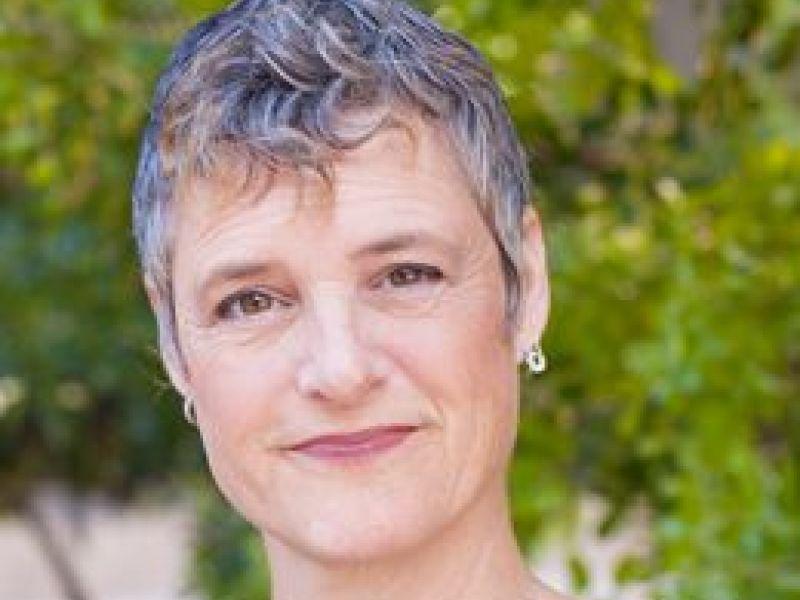
State Sen. Sarah Eckhardt, an Austin Democrat, is running for Texas comptroller of public accounts in the Nov. 3 general election.
Also on the ballot are Don Huffines (Republican), Shehla Faizi (Green) and V. Alonzo Echevarria-Garza (Libertarian).
Asked why she is running, Eckhardt said in our candidate questionnaire: "Texans are paying more for gas, groceries, and housing than ever before—even as our state boasts one of the largest, strongest economies in the country. … It is time to ask hard questions so Texans get honest answers about where their tax dollars go."
She said she would "audit the $1 billion private school voucher program under this office's oversight, stand up for our public schools, stop no-bid contracts to wealthy donors, investigate tax breaks for data centers, and open the state budget to the public …"
Candidate information
Occupation: "Attorney and public official."
Party affiliation: "Lifelong Democrat, but I am running in this race to serve Texans regardless of party."
Education: "Double Longhorn: LBJ School of Public Affairs and UT Law." According to BallotReady profile data, Eckhardt holds a bachelor's in theater from New York University (1986), a master's in public affairs from the University of Texas at Austin (1998) and a juris doctor from the University of Texas at Austin (1998).
Family: "I am the youngest of seven, the parent of two, and owner of a couple of fur babies."
Family in politics: "Among my immediate family, I am the odd-one-out in my family as the only one who pursued public office like my dad, the late Congressman Bob Eckhardt …"
Experience and public service
Previous offices held: "Currently the state senator for District 14, comprising Austin and surrounding areas; previously, the Travis County Judge, Travis County Commissioner for Precinct 2, and Assistant County Attorney for Travis County."
Asked about accomplishments that qualify her, Eckhardt said: "As the chief executive over Travis County, the 5th largest in the state, I cut taxes 3 times in 5 years, balanced the budget 3 times, built infrastructure on time and on budget, and oversaw a massive increase in good-paying jobs."
She added: "In that role, I managed more than 4,000 employees; there are 3,000 in the Comptroller's office, and I am prepared to let them loose doing the honest work of telling Texans where their money is going."
On the issues
Revenue estimate and political pressure: The comptroller's biennial revenue estimate sets how much the Legislature can spend. Eckhardt said the process "requires steadiness and maturity to ensure that the Legislature's ultimate budget is fiscally sound. This is not an opportunity to inject political grandstanding."
Education savings accounts: Eckhardt said that while she did not vote for the voucher program as a state senator, her responsibility as comptroller "is well laid out in the law." She said she would "very carefully and aggressively manage the program to ensure that contractors are complying with their obligations to the state." She pledged to "accurately and transparently report to the Legislature and to the people of Texas who is benefiting from the program a lot, a little and not at all."
Property taxes: Asked whether she supports proposals to eliminate school district property taxes, Eckhardt said: "Texans should not pay more taxes than necessary to fund statutory state services." She called the current strategy of using state revenue to compress school property taxes "ill-advised," saying it "relies on temporary budget surpluses" and that "assuming these boom conditions will last indefinitely is fiscally reckless." She added that current policies "ignore other struggling groups—such as young homeowners, businesses, and particularly renters, who receive zero relief under current state proposals."
Economic development incentives: Eckhardt said the state "abates a tremendous amount of potential revenue through a myriad of sales tax exemptions," adding that many "are just handouts to wealthy corporations that do not need the incentive …" As comptroller, she said she would "analyze all of the tax exemptions and submit a report to the Legislature on their effectiveness going forward."
The race is statewide. Rockwall County voters will see it on their Nov. 3 ballot.
Candidate responses were collected through the Surround Sound News candidate questionnaire. Answers are presented in the candidate's own words.